

How to Draw a Sunset with Colored Pencils: A Creative Journey with LindeHobby
Imagine sitting down with a set of colored pencils on a peaceful evening, capturing every detail of a sunset. The sky blends with shades of red, orange, and purple, as you bring this natural masterpiece to life on paper. Drawing a sunset is a soothing way to explore your creativity.
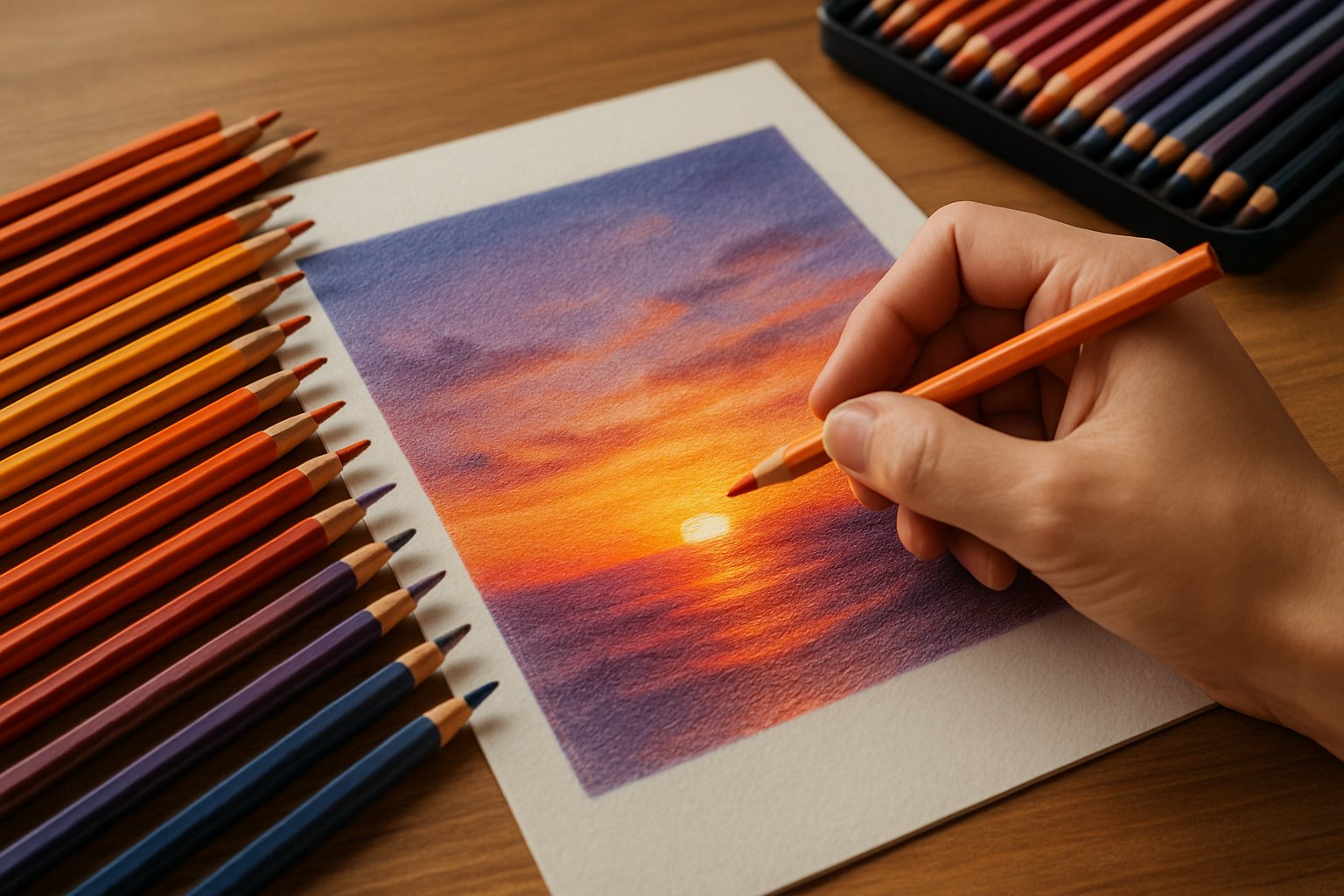
Colored pencil drawings of sunsets let you express different moods through vibrant colors and beautiful gradients. They offer a balance between structured technique and freestyle art, inviting both new and experienced artists to enjoy the process. You'll discover how rewarding it is to see your artwork come alive with each layer of color added.
Whether you draw for relaxation or as a hobby, understanding how to translate a sunset into a drawing opens a world of artistic possibilities. LindeHobby provides a variety of high-quality materials to inspire your creative journey. So, get ready to create stunning sunset scenes you can proudly hang on your wall.
See our drawing and painting assortment here
Key Takeaways
- Get essential materials like colored pencils for drawing sunsets.
- Follow step-by-step instructions to draw stunning sunsets.
- Add creative touches to personalize your artwork.
Essential Materials for Drawing Sunsets
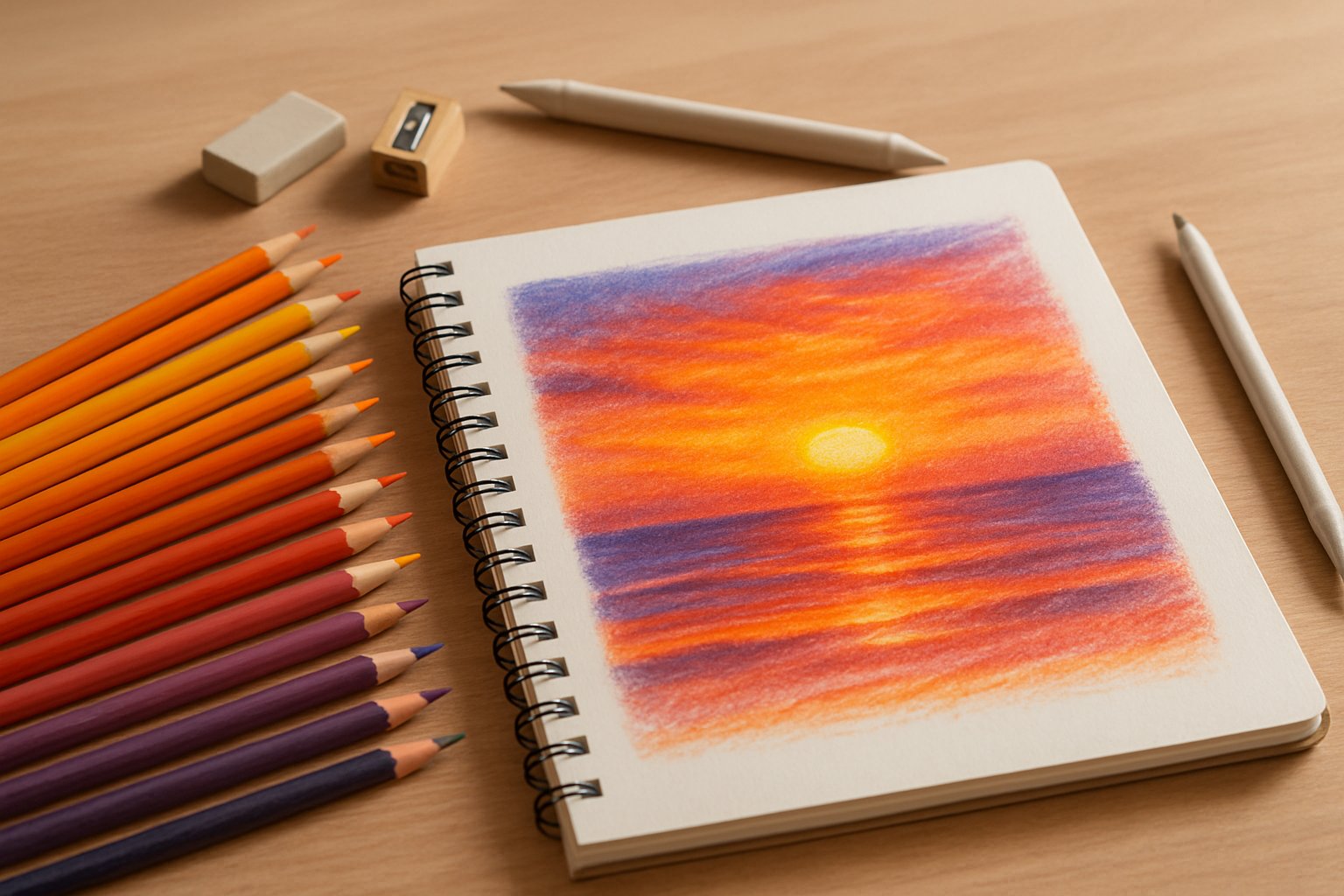
To draw a beautiful sunset with colored pencils, you need the right materials. Having quality pencils, choosing the right paper, and using helpful tools will enhance your art and make it easier.
Choosing the Right Colored Pencils
Colored pencils come in various types, like wax-based or oil-based. Wax-based pencils, such as Prismacolor, are creamy and blend well, perfect for soft sunset tones. Oil-based pencils, like Faber-Castell, are firmer and excellent for detailed work.
Consider buying a set with diverse colors to capture sunset hues, from vibrant oranges to deep blues. If you're on a budget, smaller sets can work. Check out LindeHobby for a range of options to suit your needs.
Recommended Paper Types
Selecting the right paper is crucial. Use paper with enough texture to hold layers of color. Cold-pressed watercolor paper is a great choice. It’s thick and has a nice texture for blending.
Bristol board is smooth and suitable for intricate details. Always test the paper with your pencils before starting your main piece. This ensures your pencils will blend well and create the smooth transitions needed for a sunset.
Supporting Tools and Accessories
Supporting tools make your drawing process smoother. You might need a pencil sharpener for crisp lines, and a kneaded eraser to gently lift color and adjust mistakes without damaging your paper.
Blending stumps are helpful for smoothing colors together. To protect your artwork, consider fixative sprays to preserve and seal your finished sunset. Visit LindeHobby for these handy accessories, ensuring you’re well-equipped for your sunset creations.
Step-by-Step Guide to Drawing a Sunset
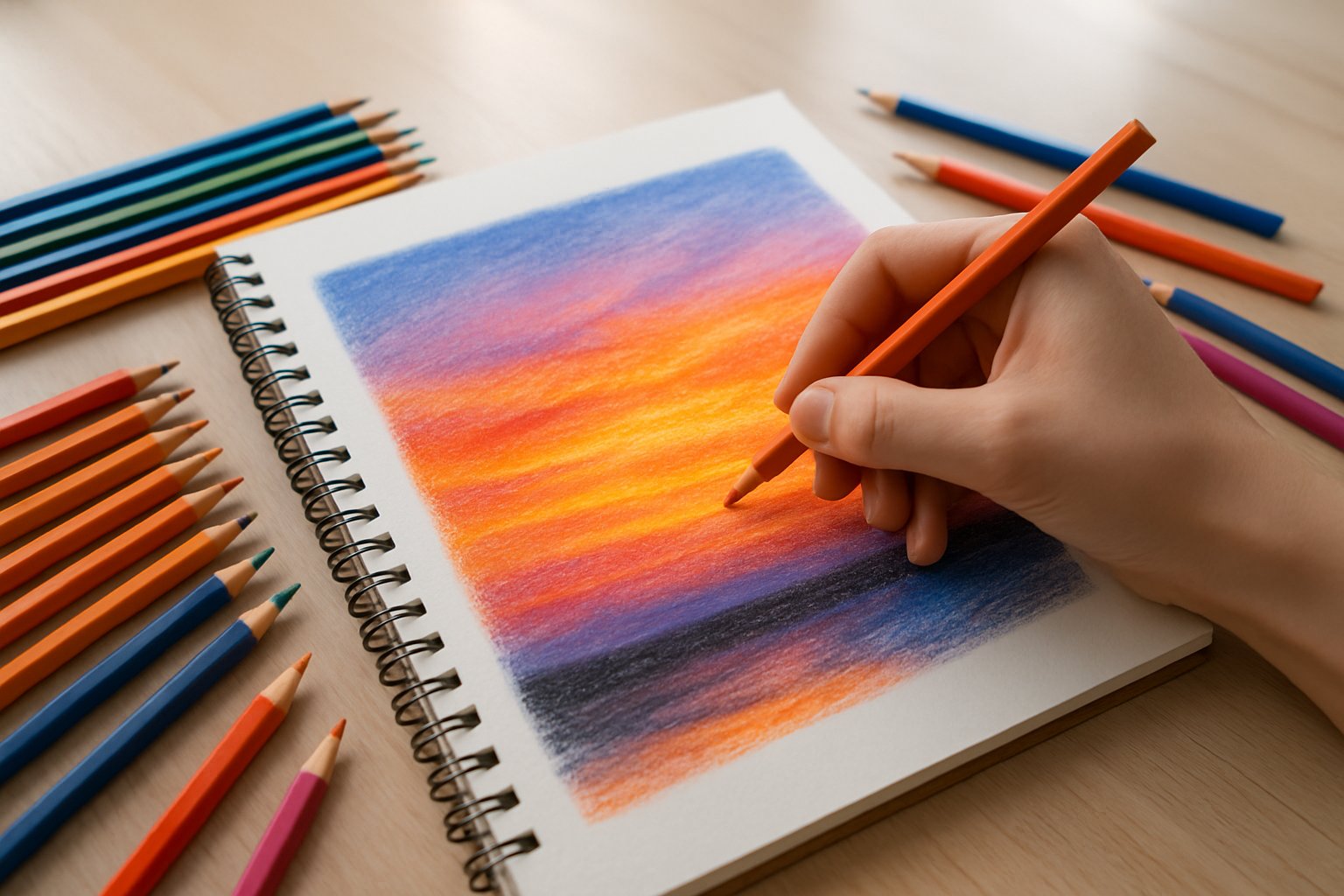
Create a stunning sunset with colored pencils by starting with a simple sketch of the horizon. Then, choose the right colors to blend into smooth gradients. Add depth with shadows and highlights for a lively scene.
Sketching the Horizon and Skyline
Begin by lightly sketching the horizon line across your paper. This divides the sky from the ground or water. Use a pencil with a soft lead for easy adjustments. Decide if you want any landforms, like mountains, in the distance.
For a basic skyline, add a simple outline of hills or a cityscape. Keep the lines soft and easy to erase.
Tip: Use a ruler to keep the horizon straight if you’re new to drawing. This ensures a balanced scene. A notebook or sketchbook from LindeHobby can be handy for practice sketches.
Layering Base Colors
Start with layering light colors at the bottom of the sky, such as yellow or peach, using gentle, even strokes. Work your way up with deeper hues like orange, red, and eventually purple or blue at the top.
Make sure the transitions are smooth. This builds a realistic gradient effect. Always work from light to dark colors to avoid muddying your drawing.
Materials Needed: Choose quality colored pencils for rich hues, like those from LindeHobby. They offer both beginner-friendly sets and premium options. Don't forget a good quality paper to enhance the finished result.
Blending Techniques for Smooth Gradients
To achieve smooth gradients, use a blending pencil or tool. Blend gently where the colors meet, using circular motions. This technique minimizes lines or harsh edges where colors overlap.
If you prefer, you can use a soft tissue or cotton swab for blending. Be careful not to press too hard, as it might damage the paper.
For beginners, practice blending different color combinations on scrap paper. LindeHobby’s affordable art supplies make it easy to explore various tools and methods without breaking the bank.
Adding Depth with Shadows and Highlights
Enhance your sunset by adding shadows to the landscape and highlights. Choose a darker pencil for shadows on any landform or object. This adds dimension and drama.
For highlights, use a white or very light pencil to emphasize areas where the sun hits. This creates a glowing effect that brings your picture to life.
Consider using a soft eraser to lift some color and replicate the effect of bright sunlight on certain areas. Remember to check out LindeHobby’s wide range of art supplies to find the perfect materials for your sunset drawing.
Ready to bring your sunset to life? Gather your tools from LindeHobby, and let your creativity soar!
Creative Finishing Touches
Adding creative touches can transform your sunset drawing into a unique piece of art. Focus on silhouettes, atmospheric effects, and correcting any mistakes to enhance your artwork's visual appeal and expressiveness.
Incorporating Silhouettes
Silhouettes add depth and interest to your sunset scene. You can draw simple shapes like trees, birds, or distant mountains using black or dark colors. Start by lightly sketching the outlines with a pencil. Once satisfied with the placement, fill them in with darker shades.
To create smooth edges, use soft, steady strokes with your colored pencils. This will make the silhouettes stand out boldly against the vibrant colors of the sunset.
Try varying the size or style of silhouettes to create a more balanced and dynamic scene. This small addition can elevate your artwork from simple to striking.
Enhancing Atmospheric Effects
To boost the atmosphere of your sunset drawing, focus on gradients. Gradually blend colors from light to dark to mimic how light scatters at dusk.
Using a soft tissue or blending tool, carefully smooth transitions between shades. This can help recreate the soft, glowing effect of a real sunset.
To capture the essence of the sky, consider adding subtle hints of cloud formations. Light strokes of grays or other tones can suggest clouds, adding more realism.
Experiment with adding light reflections or highlights on any water surfaces. These little details contribute to the overall mood and ambiance of your drawing.
Fixing Common Mistakes
Correcting mistakes is key to maintaining a clean and polished look. If colors have smudged or lines look uneven, gently use an eraser to lighten areas or redefine edges.
Use a white pencil to cover small errors or reinforce highlights. This technique can also brighten your sunset colors, making them pop more vividly.
To avoid future errors, layer colors gradually rather than pressing hard from the start. This approach allows you more control and helps prevent strain on your paper.
Keep an eye on proportions and balance to ensure your elements don't overwhelm the drawing's main focus, the sunset. Also, exploring LindeHobby’s collection of quality colored pencils can make a huge difference in the outcome of your work, offering vibrant pigments and smooth application that are both beginner and budget-friendly.

