

How to Draw the Northern Lights with Colored Pencils Easy: A Creative Journey with LindeHobby
If you've ever dreamed of capturing the magic of the northern lights on paper, you're in the right place. You don't need to be a professional artist to create a beautiful drawing of the aurora borealis with colored pencils. Start by gathering a few simple supplies to bring this breathtaking natural wonder to your canvas.
Using colored pencils, you can translate the vibrant hues of the night sky into your own artwork. This activity is not only a relaxing escape but also a way to explore your creativity. With a few easy lines and shading techniques, you'll soon have a piece of art that brings the northern lights to life.
The best part? You can personalize your drawing with your favorite colors and styles. At LindeHobby, we offer a variety of high-quality art supplies to suit any budget. Whether you’re a beginner looking to try something new or an experienced artist seeking inspiration, our range of options ensures that you’ll find the perfect tools for your project.
See our drawing and painting assortment here
Key Takeaways
- Gather essential supplies to start drawing.
- Follow simple steps to sketch the northern lights.
- Enhance your drawing with realistic details.
Essential Supplies for Drawing the Northern Lights
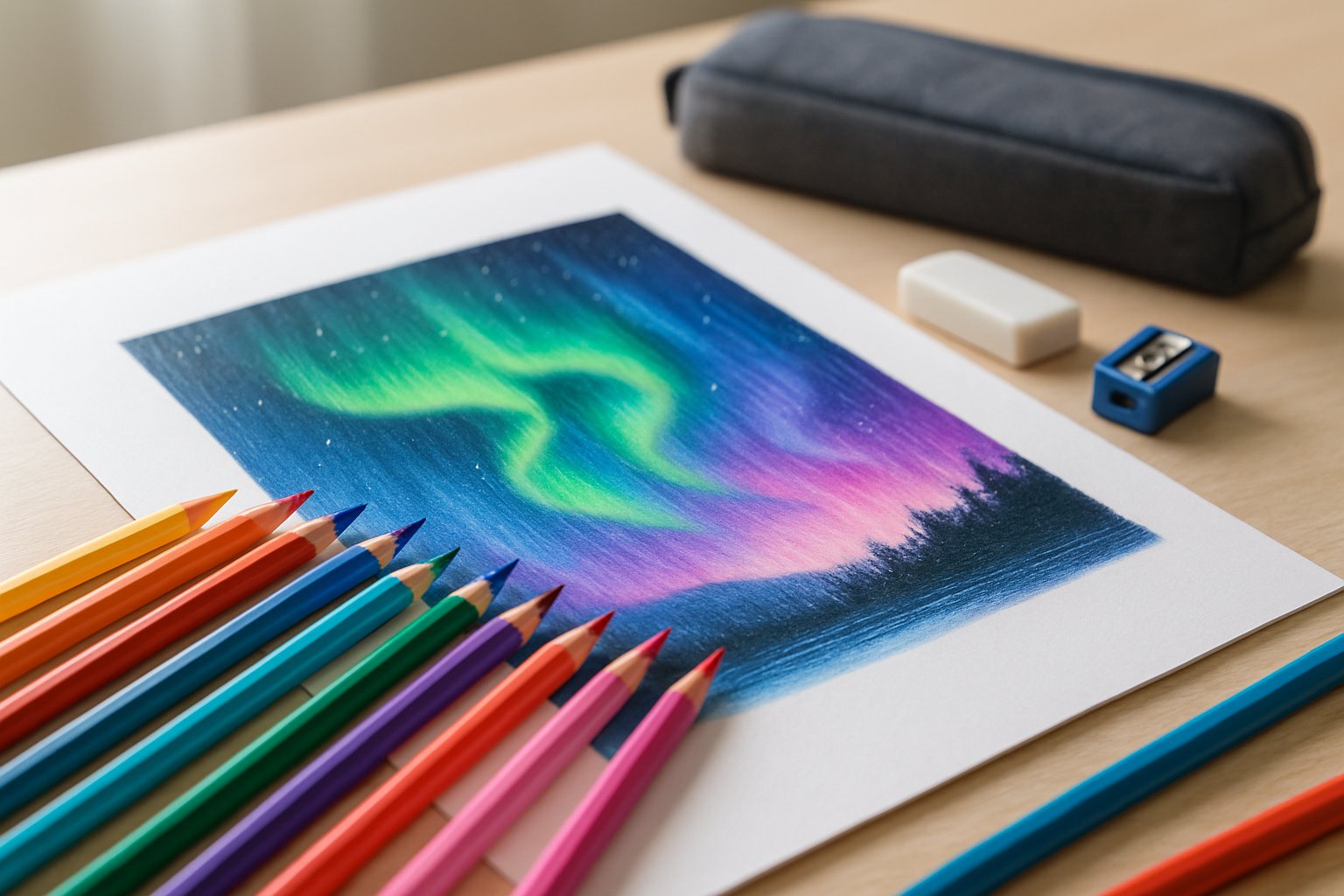
To draw the northern lights with colored pencils, you'll need a few key supplies. Choosing the right colored pencils, selecting the best paper, and picking helpful tools will make your artwork shine.
Choosing the Right Colored Pencils
High-quality colored pencils are essential for vibrant artwork. Look for sets with a wide range of colors like greens, blues, and purples to capture the beauty of the auroras. Brands like Prismacolor or Faber-Castell offer rich pigments and smooth application.
Consider investing in both wax-based and oil-based pencils. Wax-based pencils blend well, while oil-based pencils create fine details. Start with a basic set if you are a beginner, or explore premium options if you're more experienced.
The Best Paper for Blending
The right paper can make a big difference in how your drawing turns out. Choose paper with a smooth texture that allows for easy blending. Look for brands specifically labeled for colored pencils, as they typically support layering techniques.
Paper weight matters, too. Opt for heavier paper, like 160 GSM or above, to prevent tearing and buckling. Using a sketchbook designed for mixed media can give you versatile options for various projects, including drawing the northern lights.
Helpful Accessories and Tools
To enhance your drawing process, consider some handy tools. A blender pencil or blending stump helps smooth out colors, achieving a more realistic sky. Use an eraser pencil for precision to clean up edges or lighten areas.
Try using a fixative spray to set your artwork and protect it over time. If you're a beginner, basic tools often suffice, but more advanced artists may benefit from these additional accessories to refine their drawings.
Visit LindeHobby to explore a wide selection of art supplies to fit every budget, whether you're starting out or looking to expand your collection.
Step-By-Step Guide to Sketching the Northern Lights
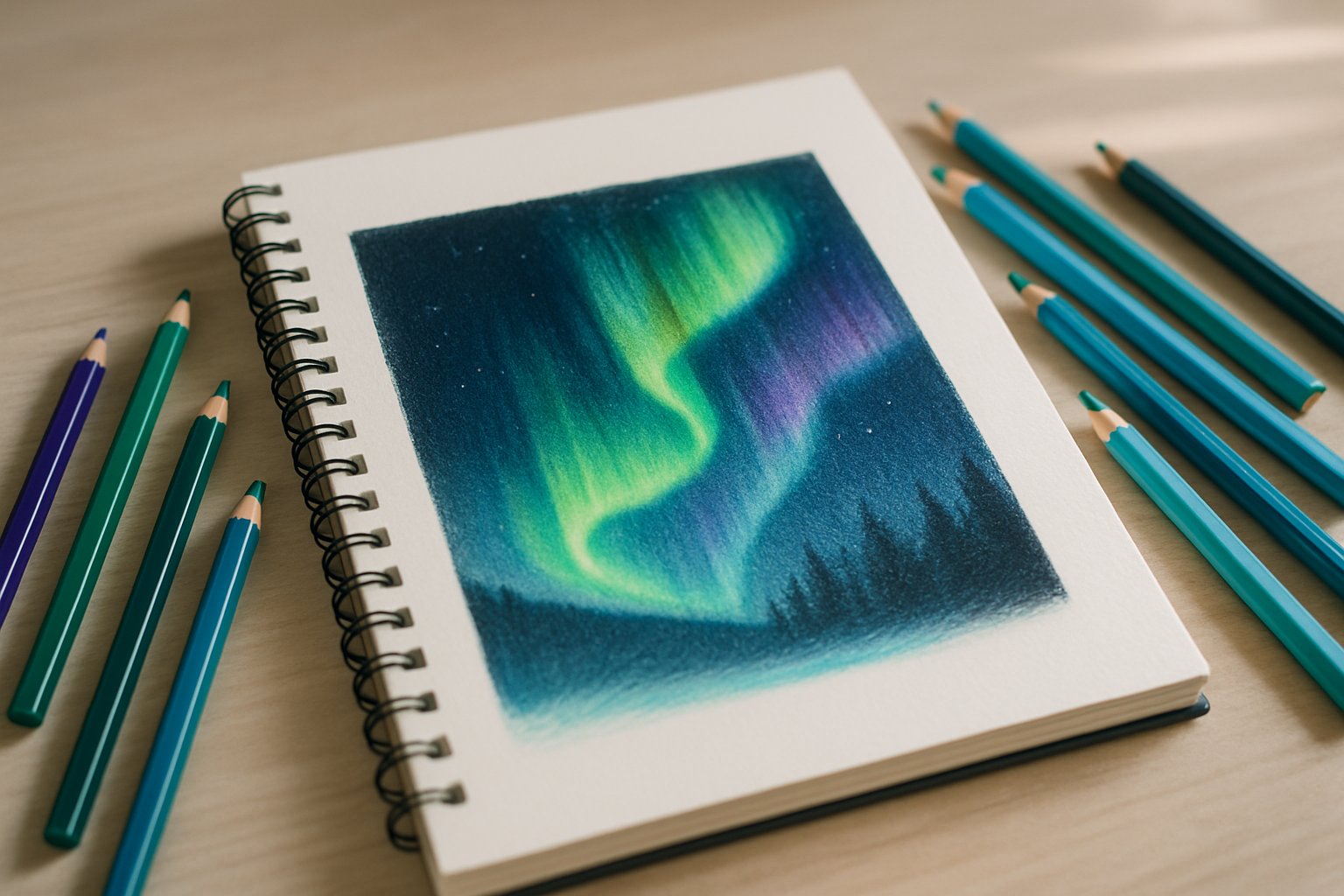
Drawing the Northern Lights with colored pencils can be a rewarding project. This guide will take you through sketching the basics, selecting colors, and creating stunning effects that capture the spirit of the Aurora Borealis. Learn about layouts, background techniques, and vibrant color blending.
Planning Your Composition
First, choose a reference photo of the Northern Lights. This will guide your layout.
Sketch a faint outline of the horizon line and the general shape of the aurora using a light pencil.
Consider where you'd like to place trees, mountains, or other features. This adds depth to your drawing.
Experiment with different compositions on scrap paper before finalizing your choice. This helps you plan the flow of lights across the sky.
Having a design in mind makes the drawing more cohesive.
Creating the Background Effect
For the background, use a dark blue or black colored pencil to create the night sky.
Begin at the top of your page and use light, circular motions. Apply less pressure as you move downward.
This gradient effect simulates a real night sky. Layer with other dark shades like navy or deep purple for more depth.
Add soft strokes for stars using a white pencil. This adds a magical sparkle.
If the background is too intense, gently blend with a cotton ball for a softer look.
Blending Techniques for Smooth Transitions
Blending is key for a realistic touch. Start by selecting aurora colors like greens, pinks, and blues.
Apply them in gentle, overlapping strokes. Blend using a colorless blender pencil or a soft tissue.
Keep layers smooth by reworking until the shades merge without harsh lines. This mimics the flowing nature of real auroras.
To sharpen the colors, go back with the pencils and intensify certain areas.
Practice on a spare sheet first to perfect your strokes and pressure.
Adding Dynamic Aurora Colors
Now add vibrant hues associated with the Northern Lights. Choose high-quality pencils for brighter results.
Use greens, violets, yellows, and reds, layering them over the background.
Go from light to dark where the lights fade into the sky.
Experiment with diagonal strokes for movement.
Make sections of the lights brighter by layering more color. This creates a lively effect.
Vary the pressure as you color to produce rich tones and soft, glowing transitions.
Your project becomes a personalized masterpiece showcasing the natural wonder. Explore with different pencil qualities at LindeHobby to enhance your artistic endeavor.
Enhancing Your Drawing for Realistic Results
Transform your colored pencil drawing of the northern lights with some simple yet effective techniques. By focusing on highlights, layering, and finishing touches, you’ll create vibrant, realistic artwork that captivates all who see it.
Adding Highlights and Details
Highlighted areas make the colors pop. Use a white colored pencil to gently blend and lighten parts of the sky. This highlights the aurora and gives a glowing effect.
For tiny stars, use a fine-tip gel pen. Scatter them across the sky, but don't overdo it. Just a few stars add a sense of wonder. Applying light pressure gives your drawing a softer appearance, enhancing its overall beauty.
By focusing on these details, your artwork will come alive, drawing the viewer into its magical scene.
Creating Depth with Layering
Layering enhances depth in your drawing. Start by using lighter colors as a base. Gradually add darker shades. This replicates the natural gradient of the sky.
Use a soft touch, building up colors slowly. As you layer, blend hues gently using circular motions. This blending makes transitions smooth, mirroring how the northern lights dance across the sky.
Employ various shades of greens, blues, and purples. The richness of these layers provides a three-dimensional look, setting your drawing apart with realism and vibrancy.
Finishing Touches for a Polished Look
To finish your artwork, blend any remaining harsh edges. Use a blending tool or a cotton swab for a smooth finish. This creates a seamless flow throughout the drawing.
Consider framing or mounting it on a board to give it a professional look. This protects your artwork and enhances its presentation, making it ready for display.
LindeHobby offers a variety of colored pencils and art supplies. Whether you're a beginner or experienced artist, find what you need to bring your creations to life. Explore our collection today to start on your next artistic adventure!

