

How to Use Watercolor Markers for Beginners: LindeHobby's Guide to Creativity and Fun
Thinking about trying watercolor markers? They are a fun and easy way to start painting, even if you've never held a brush before. You just need a few supplies, and you can bring your artwork to life in no time. Watercolor markers are perfect for beginner artists because they are less messy than traditional paints and easier to control.
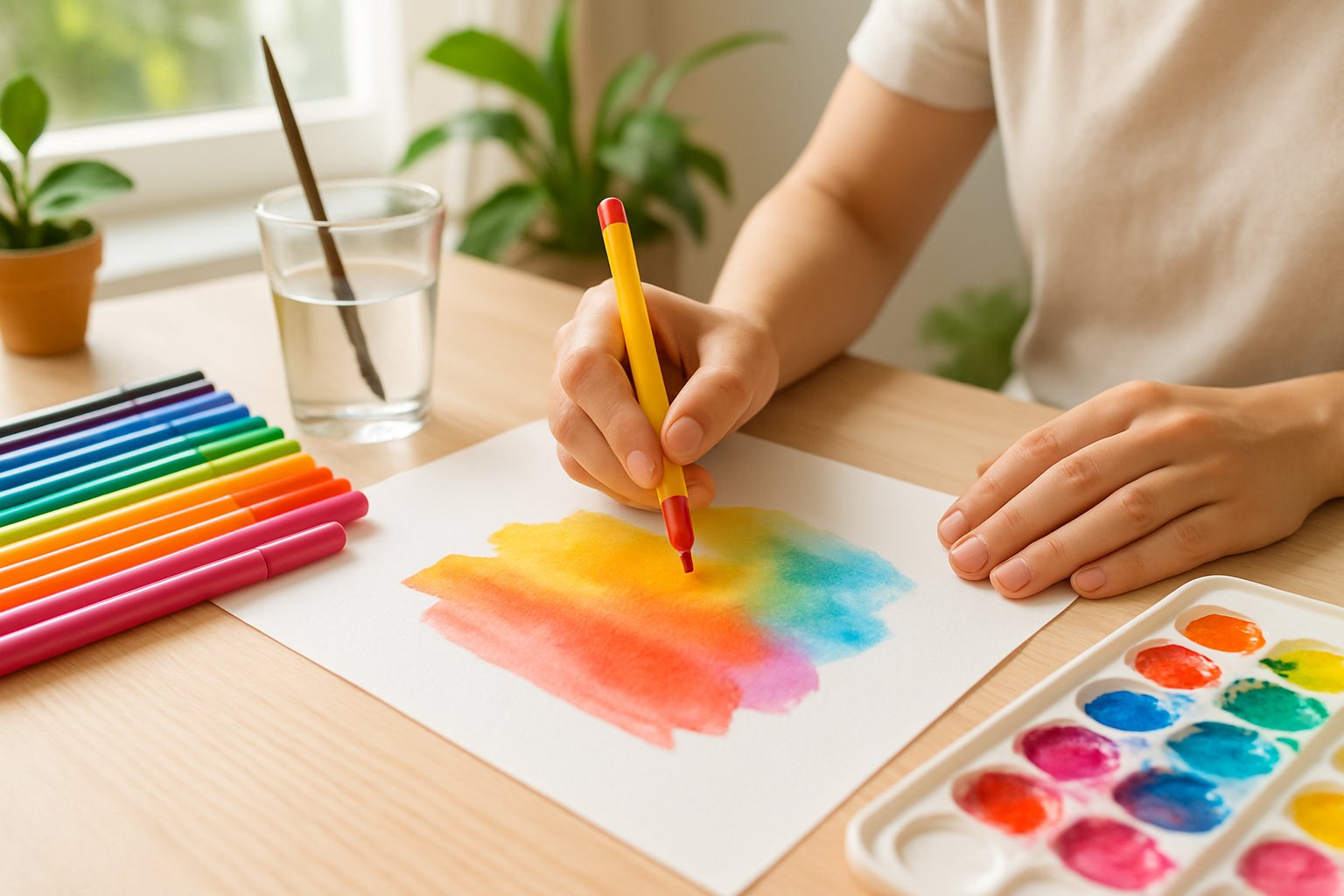
They offer the soothing experience of painting with endless possibilities for creativity. You can blend colors, experiment with different strokes, and even create unique projects that express your style. These versatile tools make it simple to dive into painting without needing a whole studio setup.
At LindeHobby, you’ll find everything from beginner-friendly watercolor marker kits to premium sets for when you're ready to explore further. Start your journey into watercolor art with us, and see how relaxing and rewarding this craft can be.
See our drawing and painting assortment here
Key Takeaways
- You only need basic supplies to start with watercolor markers.
- These markers offer a mess-free way to paint and blend.
- LindeHobby provides everything you need for both beginners and advanced projects.
Choosing Your Watercolor Markers
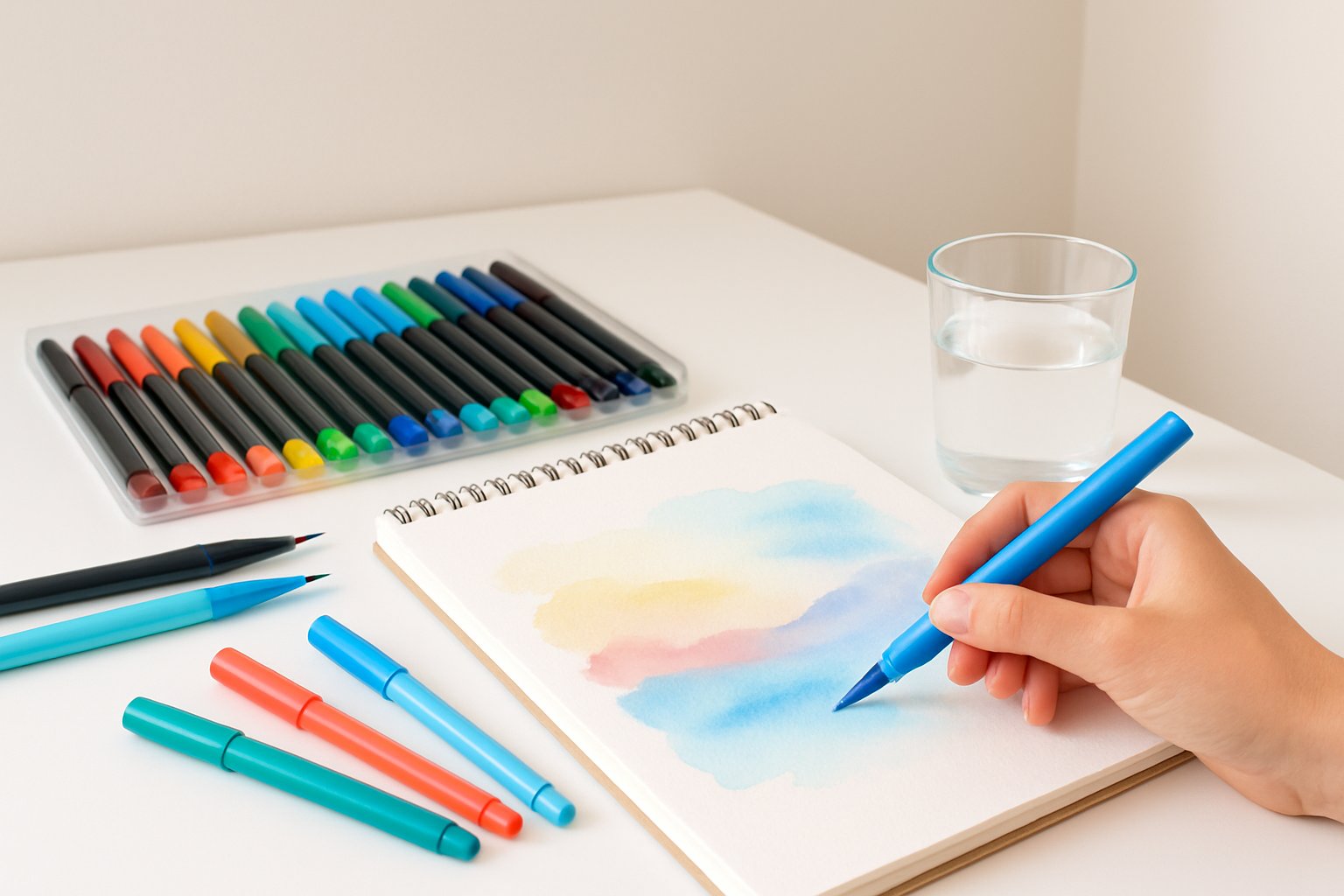
Selecting the right watercolor markers can make your artistic journey more enjoyable. Focus on the marker types, the suitable paper and tools, and the initial color selection to start confidently.
Understanding Types of Watercolor Markers
When starting, you’ll find three main types of watercolor markers: dual-tip, brush-tip, and bullet-tip. Each serves different purposes.
Dual-tip markers offer versatility with a fine point on one end and a brush tip on the other. Brush-tip markers mimic traditional brushes, providing smooth, varied strokes. Bullet-tip markers are great for detailed work.
As a beginner, dual-tip markers are a great choice, providing flexibility without overwhelming options. Look for markers that are non-toxic and have good color blending properties.
Selecting Paper and Essential Supplies
The paper you choose is crucial. Opt for thicker paper like 140 lb (300 gsm) to prevent warping. Cold-pressed paper is ideal as it has a slightly textured surface that helps in blending colors smoothly.
You’ll also need a palette, a water brush or paintbrush, and masking tape to secure the paper. Start simple, and LindeHobby offers kits that bundle these essentials. This allows you to focus on learning rather than gathering materials.
Picking Colors for Beginners
When choosing colors, start with a basic set of primary colors: red, blue, and yellow. This enables mixing to create a variety of shades. Add black and brown for depth and shadows.
As you gain confidence, expand your collection. Invest in sets with secondary colors like green, orange, and purple. Cross-check color selections with LindeHobby’s variety to find affordable yet high-quality bundles tailored for beginners.
By focusing on these aspects when picking your watercolor markers, you're setting the stage for an enjoyable and rewarding art experience. Explore the range of materials at LindeHobby to start your creative journey today!
Basic Techniques for Getting Started
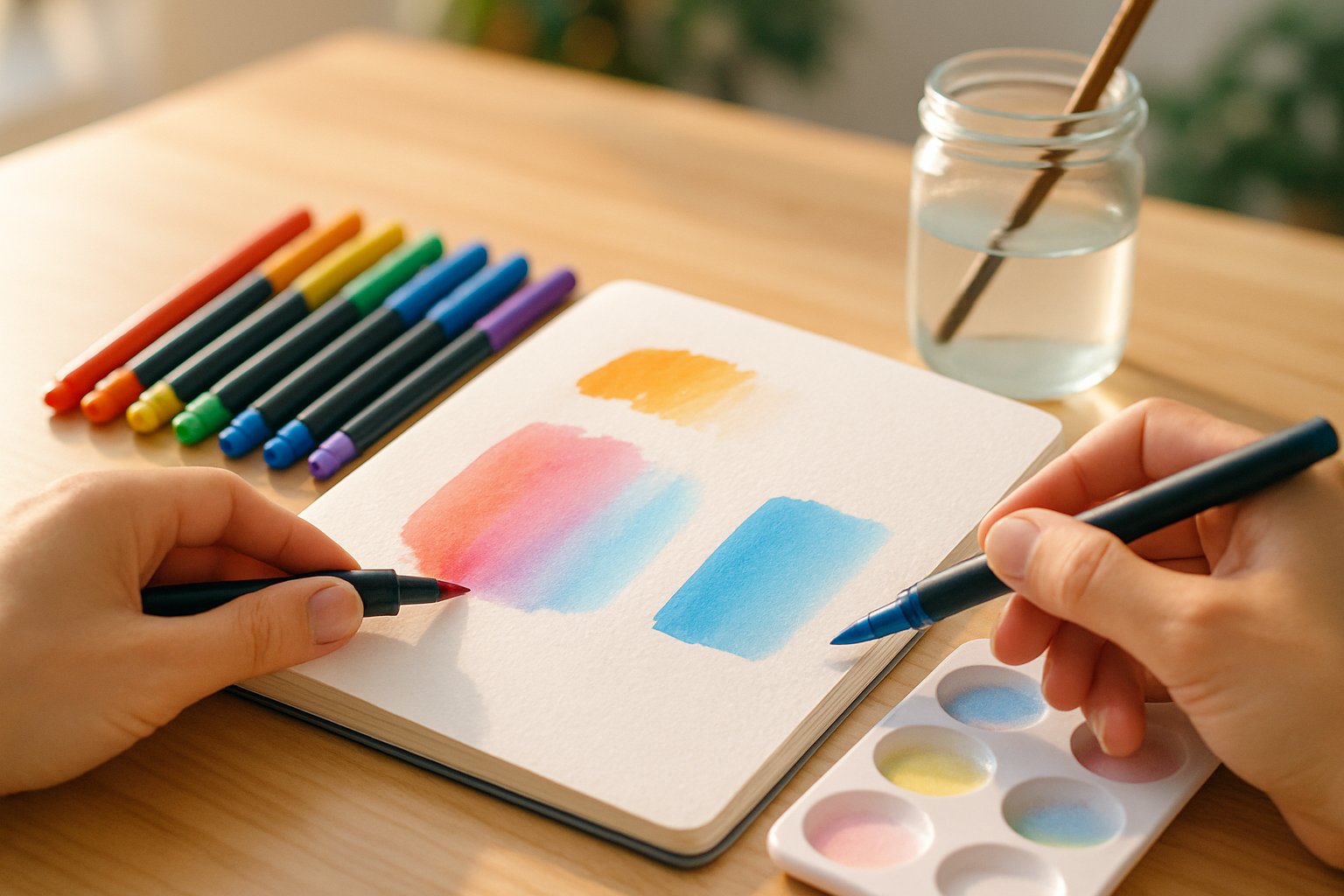
Watercolor markers offer endless creative possibilities. You'll learn how to blend colors, make smooth gradients, and create exciting textures. These methods will boost your skills and inspire new projects.
Blending and Layering Colors
Start by choosing a light color. Apply it evenly on your paper. Next, add a darker shade on top. Quickly use a damp brush to blend them.
Try layering different colors for depth. Make sure each layer dries before adding another layer. This prevents muddy effects. You can create lots of shades with just a few markers this way.
Experiment with different color combinations. You might discover favorite hues along the way. Remember, practice is key!
Creating Washes and Gradients
To make a wash, color a section with your marker. With a wet brush, spread the color. This creates smooth tones. Great for backgrounds or skies!
For gradients, start with a dark color. Gradually use less pressure as you move across your paper. Overlay a lighter shade for a seamless transition.
Varying the amount of water allows you different effects. It's all about control and practice. You'll get the hang of it!
Adding Water for Special Effects
Dabbing water on colored areas can create exciting effects. It lightens spots for an interesting look. Use a brush or spray for different styles.
Technique Tip: Allow droplets to sit for a minute. Then dab with a tissue for interesting textures.
Adding more water will dilute and soften the colors. Adjust to create your desired effect. Keep experimenting to see what you can create!
Using Brush Pressure for Textures
The way you hold your marker affects the texture. Press gently for thin lines. This is great for details and highlights.
Apply more pressure for thicker strokes. This is useful for bold designs or filling larger spaces.
Experiment with pressure. It gives your artwork more dimension and style. Try different techniques to make your work pop.
LindeHobby has a fantastic variety of affordable watercolor markers to enhance your creation process. Dive in today, and explore your artistic journey.
Developing Your First Watercolor Marker Projects
Creating art with watercolor markers is fun and can be simple with the right steps. Start with basic shapes, then add more details. Follow these tips to make your first watercolor marker projects successful.
Planning Simple Drawings
When creating your first watercolor marker project, start by choosing easy subjects like a flower, fruit, or landscape. These offer simple shapes and forms. Sketch your idea lightly with a pencil on watercolor paper. Use lines for guidance but avoid pressing too hard, as this can be tricky to erase.
Think about the colors you want to use. Watercolor markers come in many shades, so it's good to plan your palette. Consider which colors go well together and how they will blend. LindeHobby offers sets with various shades, perfect for beginners and more advanced artists.
If you're new to art, practice on scrap paper first. This helps you get a feel for how the markers work and lets you make mistakes without pressure.
Outlining and Filling Spaces
Once you have your sketch ready, begin outlining with a darker color marker. This helps define the shapes and keeps your drawing clear. Don't worry if the lines aren't perfect; the beauty of watercolors is in their fluidity.
Next, start filling in the spaces with color. Use broader strokes for large areas and finer strokes for details. Experiment with blending by adding water to the marker strokes using a brush. This creates soft edges and adds depth to your artwork.
Tip: If you want to make a smooth transition between two colors, wet the area lightly with a brush and blend the markers into each other. LindeHobby has high-quality brushes and markers that help achieve professional results effortlessly.
Finishing Touches and Details
After filling your drawing with color, give it some time to dry. Once dry, you can add details or highlights with a white gel pen or a fine brush dipped in white watercolor. These add dimension and can make specific areas pop.
Consider adding texture with different techniques like dabbing with a sponge or using dry brush strokes. For variation, try adding subtle shadows for depth. Moreover, try using different paper textures available at LindeHobby to experience how they affect the final look.
Finally, proudly display your artwork. You can use it to decorate your space or even gift it to someone special. Don't forget to check out LindeHobby's collection of materials to find everything you need for your next project. Start exploring your creative potential today!
Tips for Practice and Inspiration
Learning how to use watercolor markers can be a rewarding experience for artists at any level. By recognizing common mistakes and staying inspired through regular practice, you can improve quickly. This guide will help you avoid pitfalls and nurture your creativity.
Common Mistakes and How to Avoid Them
Beginner artists sometimes press too hard with markers, which can lead to unwanted streaks. Use a gentle touch to keep lines smooth and color even. Also, take care not to over-blend colors, as this can muddy your artwork. Try layering colors gradually instead.
Many forget to cap markers, causing them to dry out. Always replace caps immediately after use. This simple habit extends the life of your tools. It’s also crucial to use the right kind of paper. Opt for watercolor paper to prevent warping and help colors spread nicely.
Experimenting too early with advanced techniques like washes can overwhelm some artists. Focus on mastering the basics before moving on to complex methods. Keep practice sessions relaxed and fun. Mistakes are part of the learning journey. What matters most is consistency and willingness to learn.
Ideas for Daily Practice
Daily practice is key for improvement. Dedicate time each day, even just 15 minutes, to work with your watercolor markers. Start simple with basic shapes and forms, then gradually increase complexity.
Consider keeping a sketchbook to track progress and ideas. Use it to experiment with different color combinations and shading techniques. Create a theme-based series if you need structure. For example, illustrate a daily object or nature scene. Themes can stimulate creativity and encourage practice.
Browse art inspiration from artists you admire, or join a community of hobbyists like those at LindeHobby. They offer kits and supplies to ensure you never run out of ideas or materials. Practicing with quality tools makes the experience enjoyable and productive.

