

Pencil Drawing for Beginners: Unlock Your Artistic Potential with LindeHobby
Starting a new hobby can be both exciting and rewarding. Pencil drawing for beginners is a fantastic way to explore your creative side. With just a few tools and some practice, you can create beautiful artworks that express your personal style.
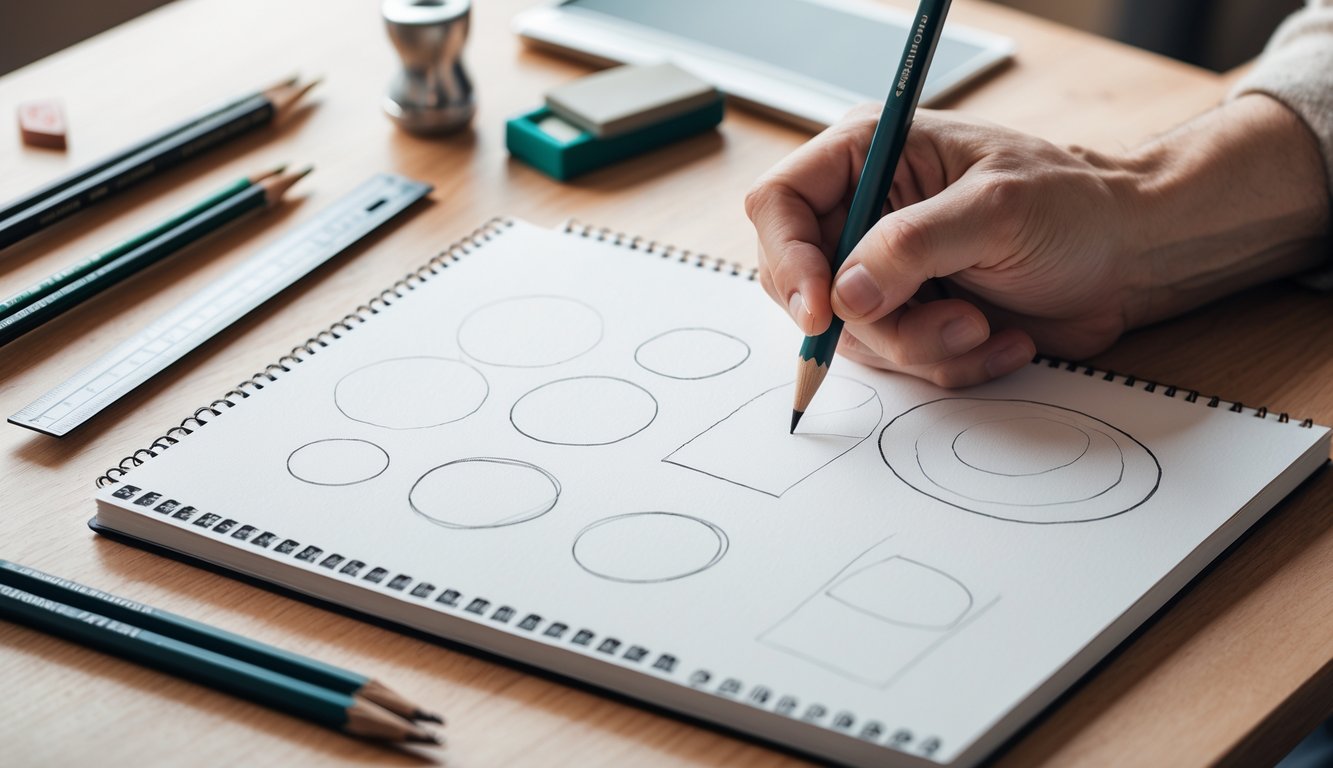
If you've ever admired a stunning sketch and wondered if you could do the same, pencil drawing is a great skill to learn. It offers a peaceful way to relax and get lost in the world of creativity. There are many helpful techniques and tools available that can simplify the process and make drawing enjoyable.
Getting the right materials is key, and understanding basic drawing methods is essential. As you progress, you'll discover your own unique style and may even experiment with different approaches. Check out our wide array of drawing materials to start your artistic journey today!
See our drawing and painting assortment here
Key Takeaways
- Gather essential materials for a beginner-friendly start.
- Learn and practice fundamental drawing techniques.
- Develop a personal style with ongoing practice.
Essential Materials for Pencil Drawing
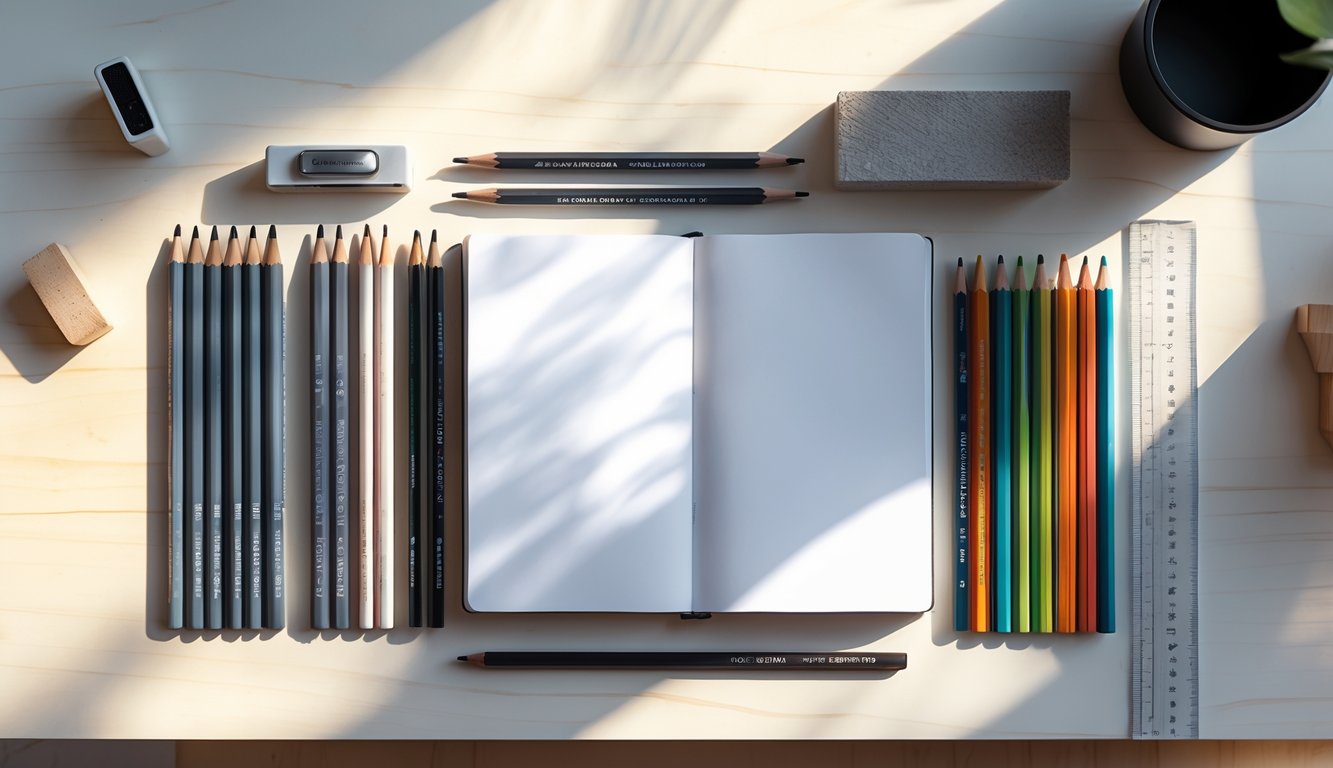
Getting started with pencil drawing might seem simple, but using the right materials can greatly affect your experience and results. From choosing pencils to understanding paper types, the tools you pick can unlock your drawing potential.
Choosing the Right Pencils
Pencils come in a range of hardness and softness, from H to B grades. Hard pencils (H) are great for light lines and fine details. Softer pencils (B) create darker and more expressive strokes. A starter set might include a 2H, HB, and 2B pencil for variety.
You can find affordable pencil sets that mix these options, making it easier to experiment. LindeHobby offers quality brands and sets that won’t break the bank, ensuring a blend for every style.
If you're an experienced artist, you might explore premium pencils for a smoother application and deeper blacks. For those just beginning, affordable options with a few grades should suffice. You can always expand your collection as your skills grow.
Types of Drawing Paper
Choosing the right paper is crucial. It influences the outcome of your drawing as much as your pencil choice. Smooth paper is great for detailed work like portraits, allowing for sharp, crisp lines and fine textures.
Toothier paper, which is rougher, holds more graphite for deeper shading and contrasts. It's favored for expressive work. Consider using sketchbooks with varying paper types to find what suits your style best.
LindeHobby’s selection provides a range of prices, from beginner-friendly pads to professional-grade paper. Look for acid-free paper to prevent yellowing over time, ensuring your art stays vibrant and lasting.
Erasers and Blending Tools
A good eraser can save your work from unwanted marks. Kneaded erasers are flexible for lifting graphite gently, while vinyl erasers provide more precise correction. Both can be found affordably, offering you options for various tasks.
Blending tools like tortillons or blending stumps help you create smooth transitions between shades. Using these can add depth and realism to your drawings. Affordable kits often include these tools along with erasers.
LindeHobby has a variety of erasers and blending tools suitable for different budgets. Consider trying different options to discover what complements your drawing style.
Fundamental Drawing Techniques
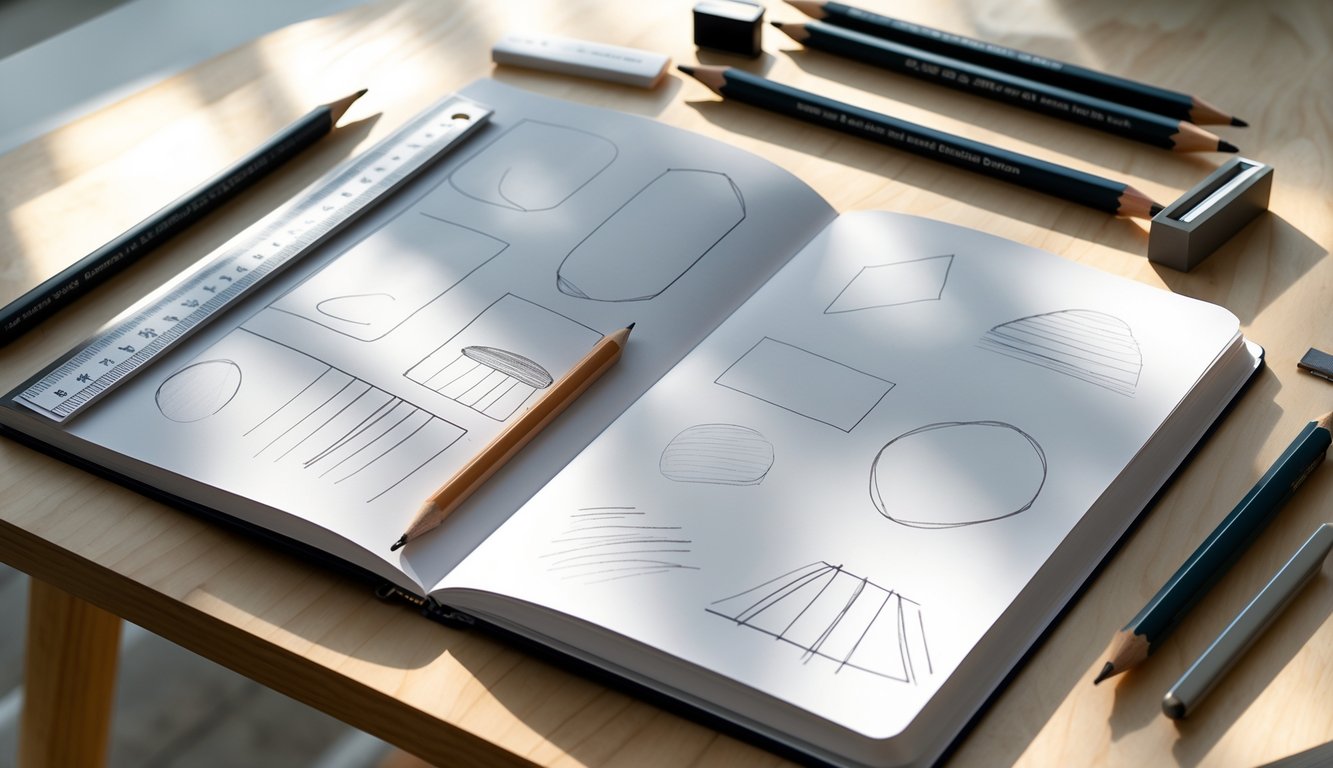
Pencil drawing offers a world full of possibilities for creative expression. Start with mastering line drawing, shading, and understanding light and shadow to bring depth and life to your artwork.
Basic Line Drawing Skills
Begin with simple lines to form shapes and outlines. Practice drawing straight, curved, and zig-zag lines. Use various pressures to create thick and thin lines, adding dynamic interest to your drawings.
Try cross-hatching by intersecting lines at different angles. This technique adds texture and dimension. Sketch lightly at first, allowing room for adjustments.
For detailed work, a softer pencil, like a 4B, works great for darker lines, while a harder pencil, like a 2H, is best for light detail. Choosing the right pencil is key to achieving the effects you want.
Shading and Blending Methods
Shading transforms flat shapes into lifelike forms. Start by identifying light sources in your scene. Use hatching and stippling to build texture and depth.
Experiment with blending tools like a blending stump or tissue. These tools soften harsh pencil marks. Apply pressure gradually to create smooth transitions.
Use a kneaded eraser to lift graphite and highlight areas, adding depth. A set of quality pencils with varying hardness levels provides versatility in shading tasks.
Handling Light and Shadow
Understanding light and shadow can elevate your artwork. Observe how light falls on objects. Experiment with casting shadows to add realism.
Create contrast by applying more pressure for shadows and lighter strokes for illuminated areas. Practice reflecting light and subtle gradients.
Try exercises with light placement and how it affects object shape and color. Capturing the interaction between light and shadow not only improves skill but also storytelling.
Dive into LindeHobby’s selection of drawing supplies to find everything you need for these techniques. Whether you’re starting with affordable kits or exploring premium tools, our variety suits every budget. Explore new skills today!
Practicing Step-By-Step Pencil Drawings
Get started with pencil drawing by breaking down complex images into simpler steps. You'll begin with basic shapes, move on to familiar objects, and finally add texture for a realistic touch. This approach will help you build your skills one step at a time.
Simple Shapes and Forms
Start by focusing on basic shapes like circles, squares, and triangles. These form the foundation of all drawings.
Draw each shape with light strokes, allowing room for adjustments. Practice varying the size and proportion to understand spatial relationships. Begin by sketching individual shapes, then combine them to create forms like cylinders or cones.
Use graphite pencils for a smooth finish, which you can find in different hardness levels at LindeHobby. To refine your skills, try drawing these shapes from different angles, which helps in learning perspective.
Drawing Everyday Objects
Once you're comfortable with shapes, move on to drawing everyday objects like mugs, fruits, or even shoes. Begin by identifying the basic shapes within the object.
For example, a mug can be broken into a cylinder and a handle. Sketch lightly to outline these basic forms, then add details to give it character.
Focus on proportion and alignment. LindeHobby offers sketch pads that are ideal for practicing, with textures that allow easy erasing and marking. Experiment by drawing these objects from various viewpoints to challenge yourself.
Creating Texture in Drawings
Adding texture brings your pencil drawings to life. Start by exploring textures like smooth, rough, or striped surfaces.
Use simple strokes like hatching or cross-hatching to mimic textures. Press lightly or firmly to vary the density, creating depth. Look at objects like fabrics, wood, or stone and try replicating their surfaces.
Experiment with blending techniques using tissue or blending stumps available at LindeHobby. Practice is key, so fill a page with texture samples to find what works best for you. This will not only improve your artistry but also enhance the realism in your work.
Find all necessary supplies at LindeHobby, where they offer a wide range to suit different needs and budgets. Start your drawing journey with their quality pencils and papers, and enjoy creating your art!
Developing Your Own Drawing Style
Creating your own drawing style can be a rewarding journey. As you explore your artistic potential, you'll learn to express yourself while building your skills. This section focuses on finding sources of inspiration, setting up a drawing routine, and avoiding common pitfalls to help you develop your unique artistic voice.
Finding Inspiration
The first step is to seek out inspiration. Look at the work of different artists, both classic and contemporary. Visit museums or explore online galleries. Notice how each artist has a distinct approach to subjects, lines, and shading. Experiment with these techniques to see what resonates with you.
Keep a journal of ideas. When you notice something intriguing, jot it down or sketch a quick version. This practice will give you a pool of ideas to draw from. Having a diverse range of inspiration helps expand your vision and anchor your style.
Consider your surroundings, too. Nature, architecture, and daily life can spark creativity. By observing the details around you, you might find unique elements to incorporate into your art. LindeHobby offers a variety of sketching materials to capture those ideas on the go.
Building a Consistent Practice
Consistency is key to building your drawing style. Set aside regular time to draw. Even short sessions can be effective. Focus on different subjects and practice various techniques. This routine not only hones your skills but also helps you discover what you enjoy.
Experimentation is vital. Try different pencils, papers, and styles. LindeHobby provides quality materials at various price points, perfect for testing new techniques. Whether you're working with basic graphite or expanding into charcoal, having the right tools encourages exploration.
Document your progress. Keep a sketchbook to track your growth. You'll begin to see patterns and preferences in your work. Over time, these habits shape your unique style.
Common Mistakes to Avoid
Avoid comparing your work too harshly to others. Every artist evolves at their own pace. Instead of striving for perfection, focus on improvement and personal growth.
Watch for over-complicating your drawings. Simplicity can be powerful. Start with basic shapes and lines, then build your complexity. Using quality materials, like those from LindeHobby, can enhance your art without needing elaborate techniques.
Another common mistake is neglecting to care for your tools. Keeping your pencils sharp and your paper clean can make a significant difference in your art quality. Regular maintenance can prevent frustration during your creative process.
Embark on this journey with confidence, knowing that your drawing style is a reflection of who you are and what you love. LindeHobby supports you with a wide range of tools to bring your visions to life.

