

How to Do Paper Mache: A Creative Guide for Craft Enthusiasts
Ever thought about transforming simple newspapers and glue into stunning art? That's the magic of paper mache. This fun and budget-friendly craft lets you sculpt amazing 3D creations with just a few household items. Paper mache is a relaxing and creative way to bring your artistic ideas to life using basic materials found around the home.
Start with collecting old newspapers, some flour, and water. These humble materials combine to form the core of your paper mache masterpiece. You can craft vibrant masks, decorative bowls, or playful animal sculptures. Best of all, it's an activity that invites creativity and relaxation, offering a soothing break from the daily rush.
Whether you're planning a new project or looking to indulge in an afternoon of creativity, paper mache offers limitless possibilities. From kids to adults, anyone can enjoy experimenting with various shapes and finishes. The beauty lies in its simplicity and flexibility, making it perfect for hobbyists and crafters of any skill level.
Key Takeaways
- Discover affordable and essential materials for paper mache.
- Learn simple techniques to create unique art pieces.
- Explore fun project ideas and ways to finish your creations.
Essential Materials and Tools
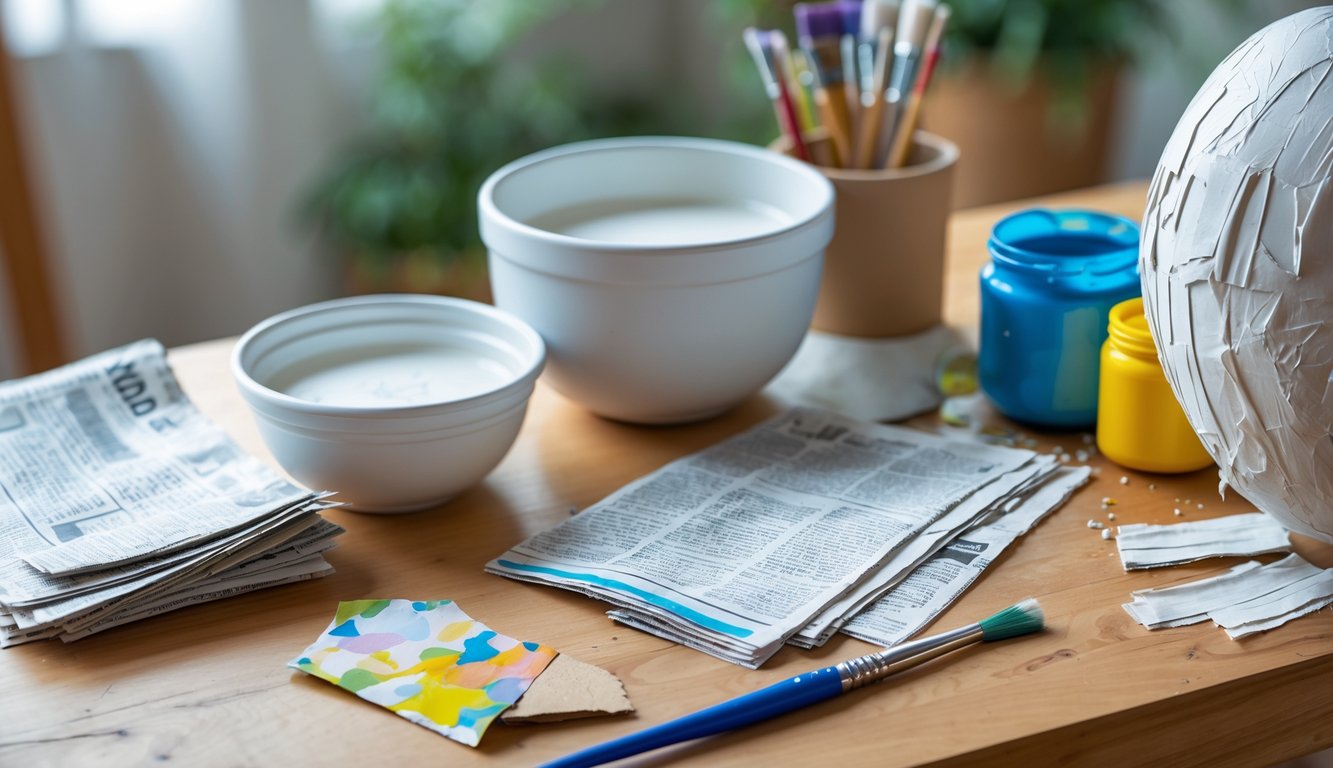
For a successful paper mache project, you'll need paper, adhesive, and a few essential tools. Each choice you make can affect the outcome, so it's important to know what's best for your project. Let's explore the options and help you get started with the right supplies.
Choosing the Right Paper
Start by selecting your paper. Common choices include newspaper, tissue paper, and plain white paper. Newspaper is ideal for its availability and cost-effectiveness. It's a great option for basic projects.
Tissue paper is perfect if you want smoother textures or translucent effects. This is useful for making delicate items.
For a more refined finish, opt for plain white paper. It works well for intricate details due to its sturdiness when dry.
Try layering different kinds to achieve unique textures. Experiment with various papers to find what works best for your design. You can easily find these options at most craft stores or use materials you already have at home.
Selecting Adhesives and Pastes
Pick the right adhesive for a strong and lasting result. Basic options include homemade paste, glue, or wallpaper paste.
Homemade paste made from flour and water is affordable and easy to prepare. Mix one part flour with two parts water for a thick consistency. This classic choice helps create sturdy models.
White glue diluted with water provides a smoother surface. This blend is useful for projects where detailed painting follows.
For a professional touch, use wallpaper paste. It's reliable and offers excellent adhesion and durability. This choice is slightly more expensive but enhances finish quality.
Consider your needs and budget when selecting an adhesive. Most options are affordable and ensure your project holds up well.
Gathering Tools for Success
Gather tools such as brushes, scissors, and containers for mixing paste.
A variety of brushes is useful for applying adhesives smoothly. Smaller brushes work well for detailed areas, while larger ones cover broader surfaces quickly.
Scissors are essential for cutting paper into strips or shapes. Ensure they are sharp to make the task easier.
For mixing paste, find suitable containers that are easy to clean. Old bowls or disposable cups work well for this purpose.
Finally, use a table cover to protect your workspace from glue and paper scraps. Many of these tools are inexpensive and may already be around your home.
With these essential supplies, you're ready to dive into your paper mache project. Make sure to explore various paper and adhesive options for creative results. LindeHobby has plenty of materials to get you started. Happy crafting!
Fundamental Paper Mache Techniques

Creating art with paper mache can be both fun and rewarding. You'll discover the essentials of making a paste, layering paper to add strength, and shaping items to bring your ideas to life.
Mixing Paper Mache Paste
Making the paste is the first step. Start with flour and water. Mix one part flour to one part water until it's smooth. Use a whisk to eliminate lumps. For a stronger bond, add a pinch of salt. This helps keep it long-lasting.
An alternative option is to use glue. Mix PVA glue and water in equal parts. This formula dries clear and works well for detailed work. Keep your paste in an airtight container when not in use.
Layering Paper for Strength
Layering gives your project strength and durability. Start by tearing newspaper into strips. Avoid scissors for a smoother edge. Dip the strips into your paste, removing excess by running the strip between your fingers.
Apply the strips onto your mold in overlapping layers. This overlap helps form a strong, cohesive layer. Aim for three to four layers to ensure sturdiness. Let each layer dry before adding the next. Patience is key to achieving a durable finish.
Shaping and Molding Basics
Choose a base shape for your project. Balloons, bowls, or cardboard frames work well as molds. Cover the base with a thin layer of petroleum jelly to prevent sticking. Begin adding paper strips to form your desired shape.
When dry, you can cut, carve, and sand your project to refine its shape. Consider using different materials like colored paper or tissue for a unique look. Experiment with painting and decorating once the structure is complete to add a personal touch.
Remember, at LindeHobby, we offer a range of supplies. From yarn to knitting kits, explore our selection to find everything you need for craft projects.
Creative Project Ideas and Finishing Touches
Explore fun ways to transform your paper mache creations. Turn simple ideas into fantastic art pieces. Add colors, protective layers, and find the best ways to showcase your work.
Building Simple Sculptures
Start with simple structures like bowls, masks, or animals. Blow up a balloon and cover it with paper mache layers for basic shapes. Let the layers dry, then pop the balloon once the structure is firm.
Use wires to shape limbs or tails. Wrap paper mache strips around the wire for stability. If you're trying a more complex sculpture, make smaller pieces to attach together.
Remember to keep your materials handy—a mix of newspaper, glue, and flour works well. For unique textures, use textured paper or fabric strips. Explore different possibilities and develop your technique over time with practice.
Decorative Painting and Sealing
Once your sculpture is dry, painting brings it to life. Choose bright or pastel colors depending on the theme. Start with a base coat for even color, then add details like spots, stripes, or patterns. Acrylic paints work well for their quick-dry nature and bright shades.
Experimenting with different brushes can create interesting effects. Try a sponge for a soft, blended look or a thin brush for intricate designs. Seal the paint with a layer of varnish to add shine and protection.
This step helps preserve your sculpture for longer. Consider adding embellishments like glitter or beads for a special touch. With each step, you enhance your sculpture's beauty and durability.
Displaying and Preserving Your Art
Find a special spot to show off your finished piece. Use shelves, wall mounts, or stands depending on the sculpture size.
Consider the light in the room; placing your art where it catches soft light can highlight the colors and details.
To preserve your art, keep it away from moisture and direct sunlight for prolonged periods. Dust gently with a soft cloth to keep it clean.
Your sculpture tells a story and showcasing it highlights your creativity and hard work. Encourage friends and family to explore this fun and creative craft too.

