

How to Set Up Your Bullet Journal: A Creative Journey for Hobbyists
Have you ever wanted to organize your life while adding a personal touch? Setting up a bullet journal might be just what you need. A bullet journal combines note-taking, planning, and artistic fun in one place. Whether you're a beginner or have dabbled in journaling before, this guide will help you create a system that suits your style.

Start by gathering some basic supplies. You only need a notebook and a pen to begin, but you can add more creative tools if you like. Customizing your journal is part of the fun. Create sections for your daily tasks, long-term goals, or even doodles. This personalized approach not only keeps you organized but motivates you to keep exploring your creativity.
Once you're set up, maintaining your bullet journal becomes a routine you'll look forward to. Use it as a relaxing break during your day or a way to unwind in the evening. Let it reflect your hobbies or interests, making it a space that inspires and rejuvenates you. Browse our wide selection of supplies to start your next project today!
Key Takeaways
- You need a notebook and pen to start a bullet journal.
- Personalize your journal with sections that suit your needs.
- Create a maintaining routine for continued motivation.
Essential Supplies for Starting Your Bullet Journal
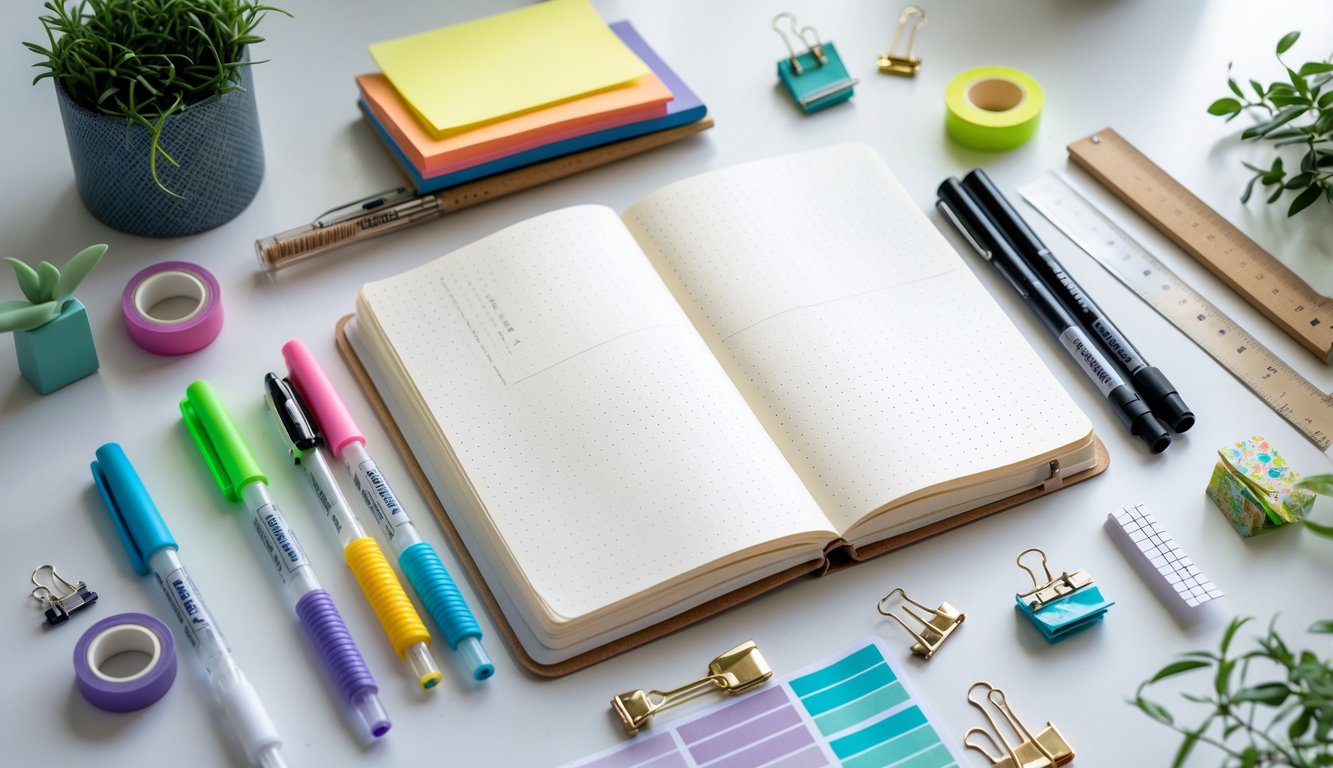
Starting your bullet journal journey involves selecting key supplies that suit your needs and style. For a seamless experience, focus on the right notebook, pens, and how to organize your space for creativity.
Choosing the Right Notebook
When setting up your bullet journal, picking a notebook is a crucial step. You'll find many options. Consider a notebook with dot grids; they offer flexibility for sketches and writing. Look for durable covers and good-quality paper that can handle different pen types without bleeding through.
Size matters as well. Think about whether you'll be carrying it around or leaving it at home. A5-sized notebooks are popular for their portability and balance between space and usability. Do you like plain or patterned covers? Choose something that inspires you to open it every day.
Selecting Pens and Accessories
Pens can make or break your bullet journaling experience. Invest in a set of fine-liners for writing and drawing. Gel pens or colorful markers add personality and make your entries pop. Choose pens that are smudge-proof and dry quickly to avoid messes.
Washi tapes and stickers are great for decoration. They let you personalize your pages without needing advanced art skills. Rulers help create clean lines, especially for beginners. You'll enjoy experimenting with different layouts and finding your own style using these accessories.
Organizing Your Workspace
A well-organized workspace boosts creativity and efficiency. Set up a dedicated area with good lighting. Ensure your supplies are easily accessible. Storage solutions like pen holders or small bins keep your desk tidy.
Inspiration boards or wall grids nearby can serve as a place for motivational quotes or ideas. A clutter-free space helps you focus and enjoy the journaling process. Embrace creativity but keep your essentials within reach for spontaneous creative moments.
Explore these essentials to begin your bullet journaling adventure. With the right supplies, you'll open up a world of creativity and organization. Whether you're a beginner or seasoned journaler, these tools set the stage for engaging with your inner artist.
Core Elements of Bullet Journaling
Bullet journaling is a flexible way to organize thoughts, tasks, and goals. To get started, you need to know about logs, collections, index pages, and symbols. These tools keep things structured and easy to find.
Understanding Logs and Collections
Logs and collections help you organize entries. Daily logs list tasks, events, and notes for each day. You can quickly jot down items, then check them off as you go. Monthly logs give a snapshot of your month. Write down important dates and events you need to remember.
Collections are themed lists or ideas. For example, you might have a collection for books you want to read or projects you want to finish. Keep them all together so you can look back at any time.
Having these sections in your bullet journal helps keep your thoughts organized. It ensures you never lose track of tasks or ideas.
Setting Up Index Pages
The index acts like a table of contents for your bullet journal. It makes finding information fast and easy. Begin by numbering each page as you fill them.
Every time you add a new log or collection, record its title and page number in your index. This allows you to jump to specific parts quickly.
For beginners, leaving space at the start for the index helps keep things organized. You don't need a huge section, just enough to note down the key parts of your journal.
Index pages are essential for quick navigation and maintaining order.
Using Keys and Symbols
Keys and symbols make your bullet journal easier to understand at a glance. Common symbols include a dot for tasks, a circle for events, and a dash for notes. You can customize these symbols but keep them simple and consistent.
Using a color code for different themes or priorities can be helpful. You might use blue for work tasks and red for personal goals.
A small guide or legend at the front of your journal can remind you what each symbol means. It's a simple tool that brings clarity to your entries and helps you stay on track.
By creating and maintaining these core elements, you’re set for success with your bullet journal. Browse our selection of high-quality pens and journals to kickstart your project!
Personalizing Your Bullet Journal Setup
Creating your bullet journal is a fun and personal journey. You can shape it to match your style with monthly layouts for organization, weekly and daily spreads for productivity, and goal-setting pages for motivation.
Planning Your Monthly Layout
Your monthly layout acts as the bigger picture for your plans. Start with a simple calendar spread to track appointments and events. Use symbols or colors for easy visual cues. This helps you see your month at a glance.
A handy feature is a task list where you jot down monthly goals, projects, or errands. This aids in prioritizing your time and efforts. Add space for notes on important reminders or inspirational quotes they’re a great way to keep you motivated.
Consider making it unique by adding doodles or themed stickers. Using washi tapes or colored markers can also bring life to the page. By customizing appearances, you ensure your bullet journal stays exciting and appealing.
Designing Weekly and Daily Spreads
Weekly and daily spreads allow you to manage your tasks in detail. For a weekly spread, outline each day of the week. This helps in breaking down tasks into smaller, achievable parts. It can feature sections such as priorities, habit trackers, and a to-do list.
For your daily spreads, you can incorporate more personal touches. Include space for gratitude, mood tracking, or meal plans. Depending on your needs, you might prefer a minimalist style or a more detailed approach.
Adding visual elements like bullet points, fun fonts, or stickers can make your pages come to life. The key is to create a space that feels good to use every day and keeps you focused on your objectives.
Incorporating Goal Setting Pages
Goal-setting pages are vital for long-term achievements. Start by defining a few key goals you want to accomplish. Break these down into manageable steps.
Adding timelines and visuals like progress bars or charts can help. You might find it motivating to decorate your goal pages with images or quotes that inspire you.
Consider using a table to track progress, noting what works well and what needs adjusting. This not only keeps you organized but also allows you to reflect on your growth. Staying motivated is easier when you see how far you have already come.
Find everything you need for your bullet journaling at LindeHobby, from pens to stickers, and explore the joy of creating your personalized planner.
Maintaining Your Bullet Journal Routine
Keeping your bullet journal updated requires developing consistent habits and regularly reflecting on your progress. This helps you stay organized and make the most of your planning system.
Establishing Consistent Habits
Create a specific time each day to update your bullet journal. Whether it's in the morning while sipping coffee or before bed, having a set time helps make it a part of your daily life. Start small by just noting key tasks or events.
Using simple tools like a mechanical pencil or colorful pens can make the journaling process more enjoyable. If knitting, crocheting, or similar hobbies interest you, LindeHobby offers great supplies that you might find helpful for creating unique journal bookmarks or covers.
Create a weekly routine to review your entries. Dedicate a few minutes to planning the upcoming week. This practice keeps you on track with your goals and lets you adjust plans before they become overwhelming.
Reviewing and Reflecting on Progress
Regularly look back at your entries to see what you've accomplished and where you might need more focus. This reflection can be done weekly or monthly and helps you understand patterns in your activities and productivity.
Make notes of what's working well and where improvements are needed. This might be in a journal section or a separate space for reflections.
Consider incorporating personal goals such as completing a knitting or crochet project. LindeHobby offers a variety of resources that can inspire and aid your creative projects. Browsing new yarns and patterns might spark ideas to include in your journal, helping track your crafting accomplishments alongside daily life.

