

How to Start Bullet Journal: A Creative Adventure in Personal Expression
Jumping into the world of bullet journaling can be both exciting and rewarding. It combines creativity, organization, and a way to express your personal style. Bullet journaling helps you keep track of daily activities, long-term goals, and everything in between. With a blank notebook and a pen, you have the power to design your own system that works just for you.
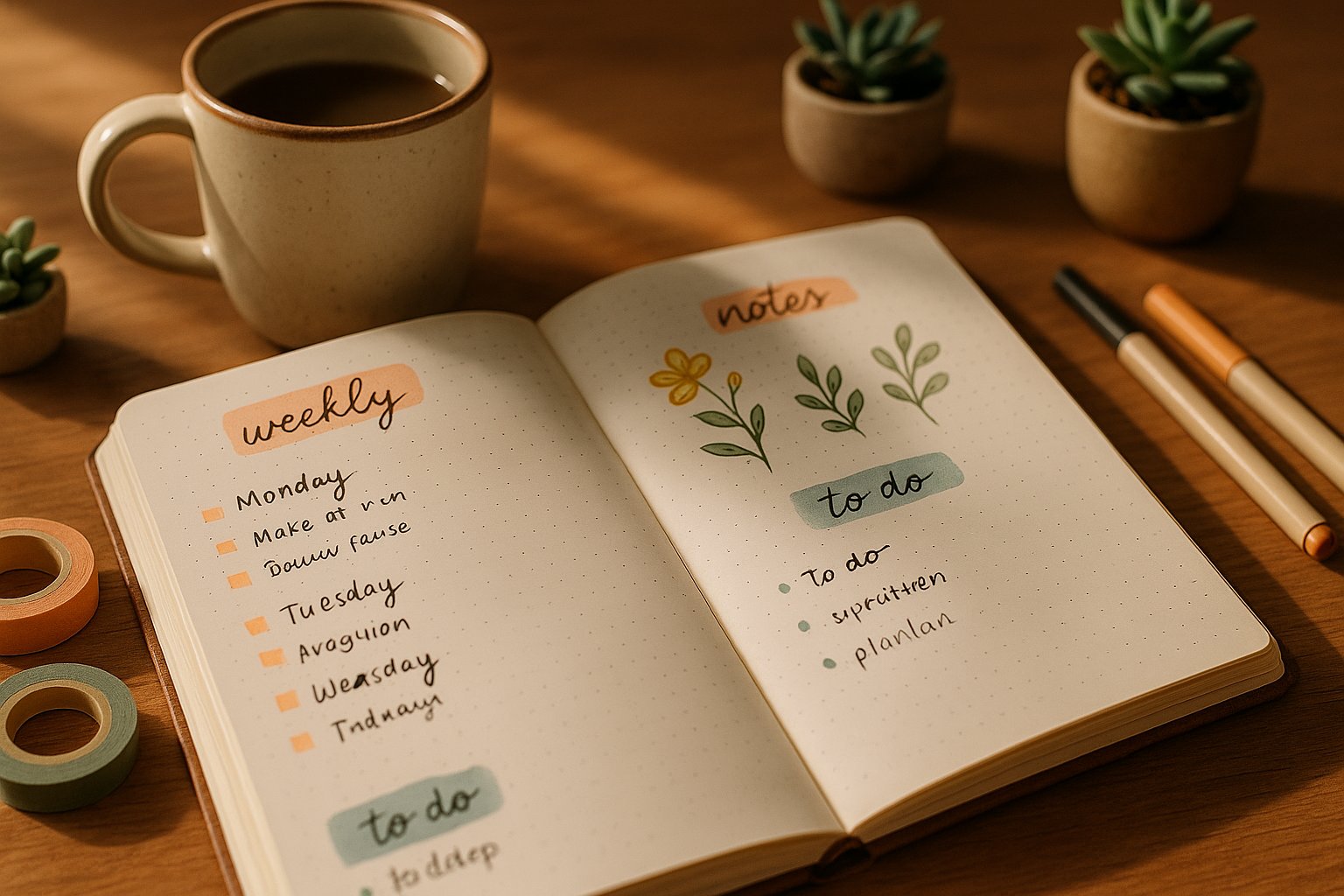
Your first step is to start small and simple. Use basic layouts for tracking habits, tasks, and notes. As you become more comfortable, you can design unique pages that suit your lifestyle. The beauty of a bullet journal is that it evolves with you, offering endless ways to customize it to fit your needs.
Embrace the journey as a creative outlet. Experiment with colors, stickers, or even drawings to make your bullet journal truly yours. This method not only gets you organized but also taps into your artistic side, making planning an enjoyable and fulfilling experience.
Key Takeaways
- Bullet journaling blends creativity with organization.
- Start simple and gradually personalize your journal.
- Use it as a creative and functional tool for your daily life.
Getting Started With Your First Bullet Journal
Starting a bullet journal is both fun and creative. You'll need some basic supplies, a system to organize your entries, and a key to help keep everything in order. Everything you need can be found at an affordable price through suppliers like LindeHobby, ensuring quality and variety.
Choosing Your Supplies
Begin by selecting a sturdy notebook. Look for one with dotted pages, as these offer flexibility for layouts. LindeHobby offers a variety of sizes and colors to suit your style. A good pen is also essential for neat writing. Consider pens with fade-resistant ink to keep your entries in good condition over time.
You might also want some colored pencils or markers to add personal touches or emphasis to your journal. High-quality yet budget-friendly options can be found at LindeHobby. These supplies will allow you to make your bullet journal uniquely yours.
Setting Up Your Journal
Start by numbering the pages in your journal if they aren't numbered already. Then, create an index on the first few pages. This helps you easily find specific topics later.
Next, set up a future log, which is a yearly calendar that shows important events coming up. Following that, create a monthly log, showing your plans and tasks for each month. Finish with a daily log, outlining your day-to-day tasks. This structure ensures you stay organized and focused.
Understanding the Bullet Journal Key
The bullet journal key is crucial. It uses symbols to quickly identify tasks, events, and notes. A common setup includes symbols like:
- Task: •
- Completed task: X
- Event: ○
- Note: -
Feel free to personalize your key with symbols and colors that work best for you. Using a key keeps your journal neat and easy to read. You can refer back to the key regularly to stay on track. A consistent key will improve your organization skills over time.
Designing Core Bullet Journal Pages
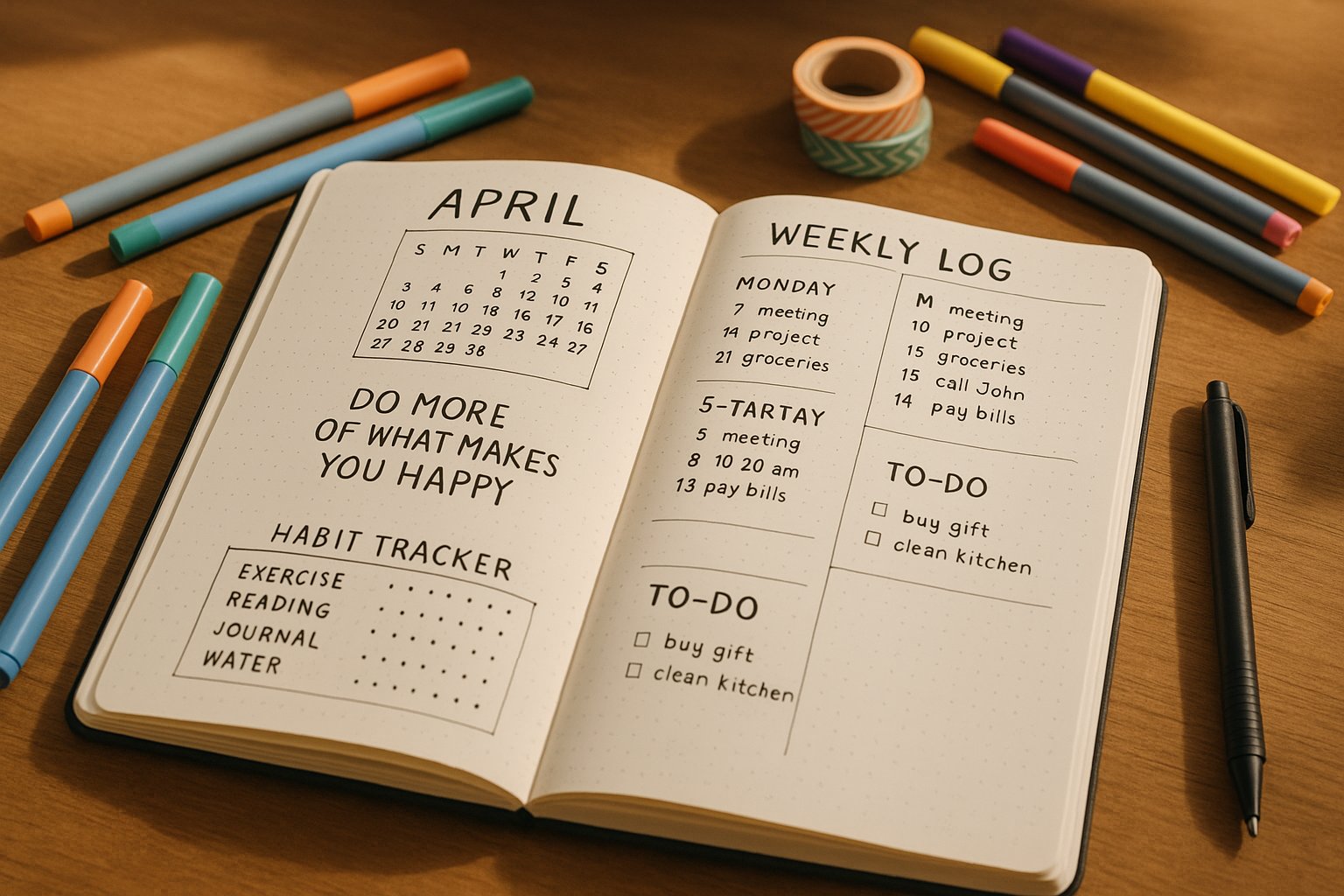
When starting a bullet journal, creating core pages is essential. These pages help organize your thoughts and plans effectively. You'll learn how to create your index, set up future logs, make monthly spreads, and build daily logs that fit your lifestyle.
Creating Your Index
An index acts as a table of contents for your bullet journal. Start by leaving the first few pages blank to serve as your index. Number your pages as you go, and list the important sections or entries in the index. This helps you quickly locate information.
Breaking down your index into categories like "work", "personal", and "projects" makes it even more streamlined. Consider using symbols or color coding to make navigation easier. This is ideal for those who want clarity and quick access.
Setting Up Future Logs
Future logs are where you jot down events, tasks, or goals scheduled for future months. You can layout these logs across two, four, or even six pages. Each page can represent a few months, giving you a clear overview of what lies ahead.
Use simple tables to divide sections by months and leave some space for notes. This setup not only keeps you organized but also helps in budgeting your time, an asset that can help you make room for crafting with LindeHobby supplies.
Making Monthly Spreads
Monthly spreads provide a snapshot of your entire month. Here, you’ll write down key events, appointments, and deadlines. Consider using a calendar layout on one page and adding a task list on the opposite. This gives an easy balance of visual planning and detailed task management.
Monthly spreads are also perfect for goal setting. For example, planning your next knitting or crochet project can easily fit into this section, ensuring you stay on track with crafting activities.
Building Daily Logs
Daily logs are where details live. Each day, you write tasks, events, and notes. This method allows you to track your daily life closely. Break down each day's page with checkboxes for tasks, bullet points for notes, and symbols for events.
Flexibility is key. Adjust the space you need based on the complexity of your day. This feature is especially handy if you’re splitting your time between work, personal activities, and hobby projects like crochet or knitting. This keeps enthusiasm for crafting high, ensuring you always find joy in your hobbies.
By creating a bullet journal with these core pages, you can streamline life and hobbies. To make the experience even more enriching, consider LindeHobby as your go-to resource for all knitting and crochet materials. This synergy of planning and crafting can turn your bullet journal into a truly personalized tool.
Personalizing and Customizing Your Bullet Journal
Bullet journaling offers endless opportunities to make it uniquely yours. From adding practical trackers to sprinkling in artistic elements, the possibilities allow for a journal that truly reflects your personal style and needs.
Incorporating Trackers and Collections
Trackers and collections are fantastic for organizing different aspects of your life in a bullet journal. Trackers can help with monitoring habits, like exercising or reading. A monthly habit tracker can be a simple table format, where each row represents a habit and columns represent days.
For collections, think about including lists such as “Books to Read” or “Places to Visit”. This section of your journal keeps your goals and interests in one place, making it easy to review and adjust as needed. These features not only keep you organized but also motivate you to keep progressing towards your goals.
Exploring Creative Layouts
The layout of your bullet journal can vary based on your needs. Some people prefer minimalistic styles, while others enjoy intricate designs. A weekly layout might include sections for each day, a task list, and a notes area.
Consider using grid lines or a dot pattern to guide your designs. This can be especially helpful in creating straight lines or aligning different sections. A creative layout not only makes your journal visually appealing, it also helps you stay more organized and effective in planning your days.
Adding Colors and Artistic Touches
Adding splashes of color can transform your bullet journal into a visual delight. Colored pens, pencils, or watercolors can highlight important tasks or upcoming events. Consider creating a color code system to prioritize items, making it easy to glance at tasks quickly.
Artistic touches like doodles, stickers, or washi tape add personality to your journal. While some might prefer simple borders, others can take time to draw small illustrations or use stencils for a more crafted look. These textures and colors personalize your journal, making it a joy to use each day while showcasing your unique artistic style.
Staying Consistent and Motivated
Keeping a bullet journal active and fresh can be a fun challenge. With some simple techniques, you can build habits that make your bullet journal an indispensable part of your daily life.
Developing a Journaling Routine
Creating a regular time for journaling helps make it a part of your daily rhythm. Find a quiet moment in your day, like in the morning or before bed, to sit down with your journal. This consistency makes it easier to keep going.
Tip: Use reminders on your phone to alert you when it's time to journal.
Pair your journaling time with a relaxing activity, such as a warm cup of tea, to make it something you look forward to. Reward yourself occasionally when you stick to your routine, but make sure your journaling itself doesn’t feel like a chore.
Making Your Bullet Journal Work for You
Customize your bullet journal to reflect your personal style and hobbies. Use colorful pens or stickers to express yourself creatively. As a hobbyist, you might enjoy incorporating themes related to knitting or crochet.
Consider setting monthly themes or goals to keep your journal fresh. Track your progress on projects or to-do lists, and feel accomplished as you see checkmarks filling the pages.
Highlight pages with special markers or tabs to find them easily later. Remember, your bullet journal is a tool to help keep you inspired and organized.
Explore different layouts or styles, and don't hesitate to switch things up if you feel the need. The goal is to keep it flexible and fun for you!

